
Crochet is built in one of two ways: around in a circle, or back and forth in rows. Which one a pattern uses tells you how to start, how to move your hook, and what your finished piece will look like.
In this lesson, you’ll learn to tell the two apart so when you pick up any pattern, you’ll know right away how it’s built.
How to crochet in the round vs rows
Watch the lesson
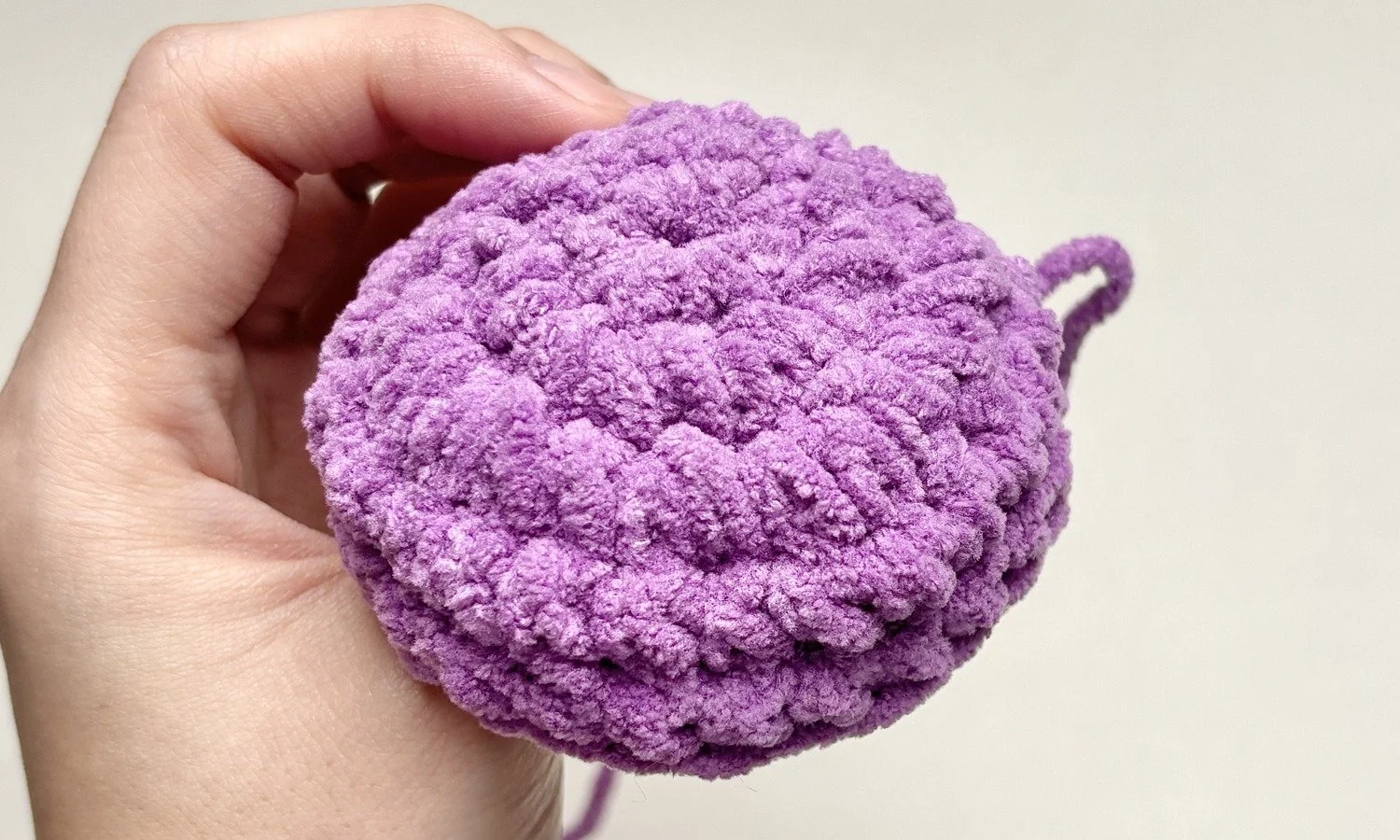
Working in the round
Working in the round usually starts with a magic ring (MR) - you can see it at the center of the piece.
From there you keep crocheting around in one continuous loop, with no turning, building the piece round after round.
It’s how you make rounded, 3D shapes - amigurumi, hats, and anything worked in a circle.
You’ll mostly use the magic ring (MR), single crochet (sc), and increases (inc) and decreases (dec) to shape it.
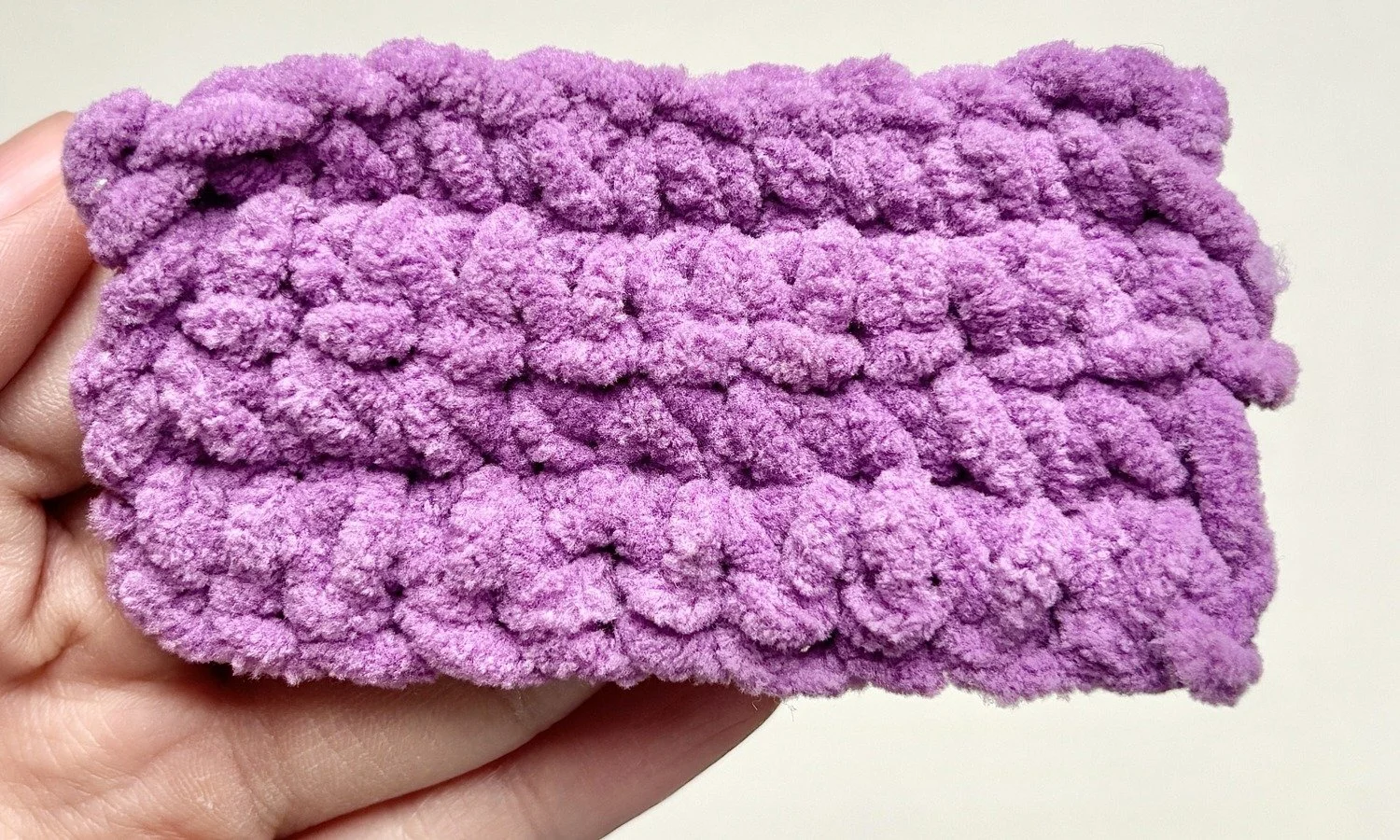
Working in rows
Working in rows usually starts with a foundation chain (ch) - a series of chain stitches.
You crochet across the row, then chain (ch) and turn your work at the end, and crochet back across the next row - every row begins that way.
It makes flat pieces - scarves, blankets, clothing, and bags.
You’ll use a wider mix of stitches: chain (ch), single crochet (sc), half double crochet (hdc), and double crochet (dc).
Many patterns use both
Plenty of projects switch between the two depending on the design.
Now that you can tell them apart, you’ll know right away how any pattern is built.
And that's the difference: in the round, you spiral around in a circle; in rows, you go back and forth, turning as you go. That's the foundation every pattern is built on - and you've just learned to spot both. We're right here with you every step of the way.

You've got it when: You can look at a pattern and say whether it is worked in rounds or rows, and where it begins.